What is composable architecture?
2024-06-30
For a long time, building a digital platform meant building a monolith. One system to handle content management, frontend rendering, commerce, email, search — everything bundled together, tightly coupled, deployed as a unit.
It worked. Until it didn't.
Monolithic platforms tend to age poorly. As requirements grow, they become harder to change, slower to deploy, and increasingly difficult to customise without breaking something else. The speed that made them appealing at the start becomes a liability.
Composable architecture is the response to that problem.
What is composable architecture?
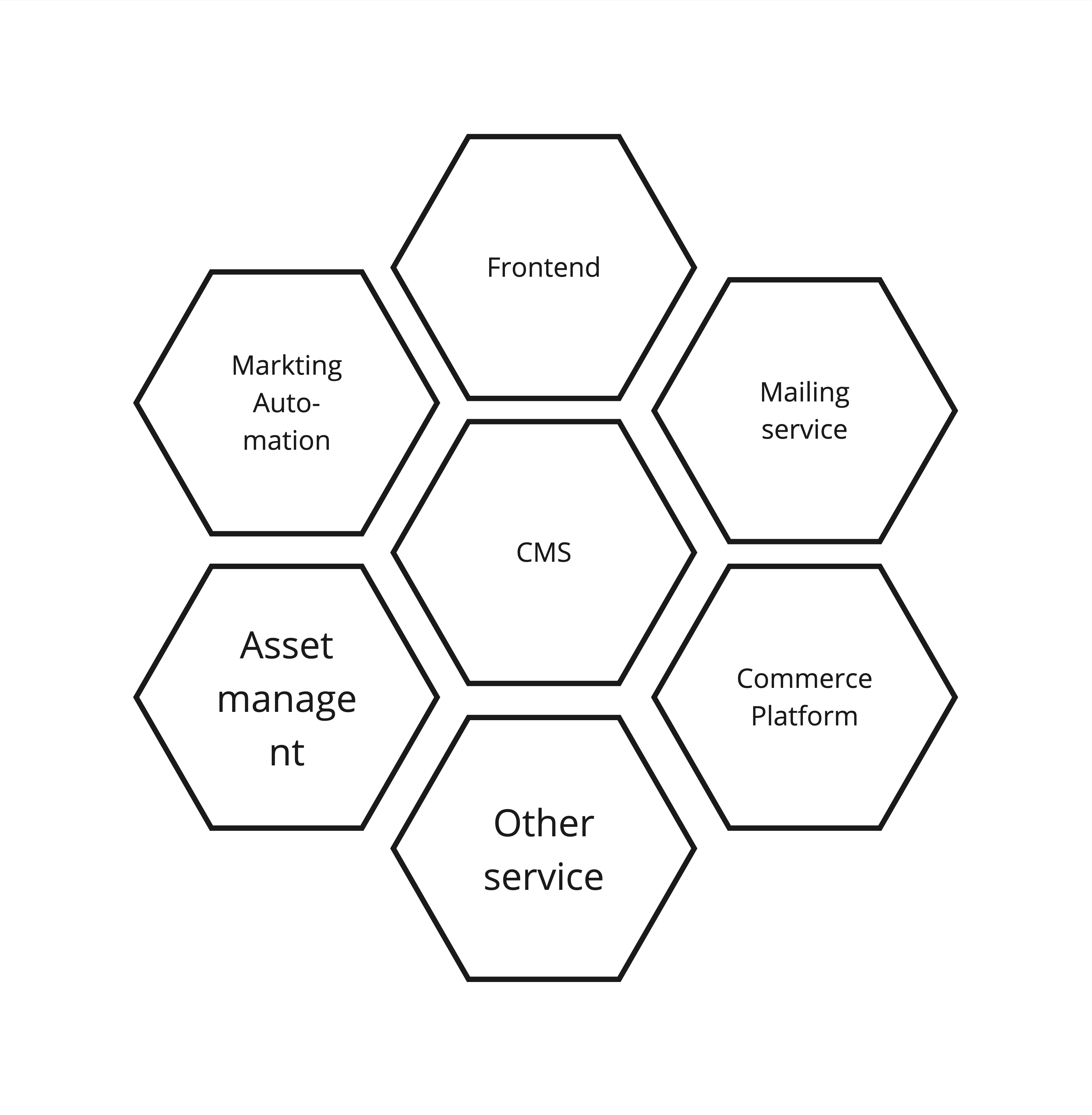
Composable architecture is an approach to building applications by creating independent, interchangeable components that work together through well-defined interfaces. Think of it like Lego — you assemble the pieces you need, and you can swap one out without rebuilding the whole thing.
In practice, this means your platform might consist of:
- A headless CMS for content management
- A separate commerce engine for product catalogue and checkout
- A dedicated mailing service
- A search provider
- A frontend layer that ties it all together
Each service does one thing well. They communicate through APIs. If you need to replace your mailing service, you replace that piece — without touching the rest.
Buy over build
One of the key shifts in composable architecture is the preference for purchasing existing SaaS solutions over building custom ones.
Instead of building your own CMS, you buy Contentful or Sanity. Instead of building checkout, you use Commercetools or Shopify. Instead of building search, you use Algolia.
This introduces recurring costs, but it dramatically reduces the cost of development, hosting, and maintenance. You're paying for a mature product with a team behind it, rather than owning a custom system you have to maintain forever.
There's still development work — integrating these services, building the frontend, adding custom features that off-the-shelf solutions don't cover. But the scope is significantly smaller than building everything yourself.
When does composable architecture make sense?
Not every project needs it.
Composable architecture suits platforms that require:
- Customisation — you need to pick the best tool for each job, not accept a one-size-fits-all solution
- Scalability — individual services can scale independently based on load
- Flexibility — the business is likely to evolve and you need to swap components over time
- Budget — integration work and SaaS licensing costs are real; this approach requires investment
For a small marketing site or a simple blog, composable architecture is overkill. The complexity isn't worth it. A well-chosen monolithic platform will serve you better.
For a large commerce platform, a multi-brand content operation, or anything where the requirements are complex and likely to change — composable architecture gives you the foundation to move quickly without accumulating a mountain of technical debt.
The key is matching the architecture to the actual problem. Not every system needs to be composable. But when it does, the payoff is significant.